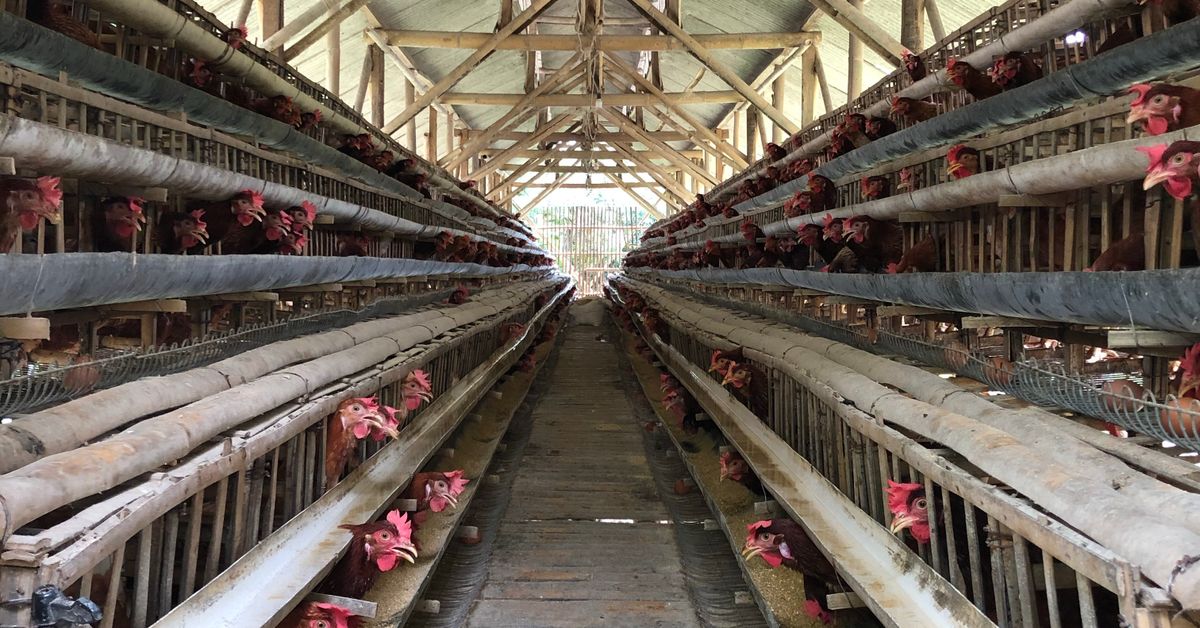
Poultry Farm in India: Setup Cost, Licences, Subsidy and Risks
A poultry farm raises chickens for meat (broilers), eggs (layers) or breeding stock. It is one of India’s fastest-growing farm businesses, because chicken and eggs are everyday foods and demand is steady. But the business also has thin margins, heavy feed costs and disease risk, so planning matters more than enthusiasm.
This guide explains the types of poultry farm, a realistic setup cost, the licences you need, the government subsidy under the National Livestock Mission, a biosecurity checklist and the risks to weigh before you invest.
Quick answer: A 5,000-bird broiler poultry farm typically needs about ₹12–15 lakh for the first cycle, including shed, equipment, chicks, feed and running costs. Feed is 65–70% of production cost. A contract farm with an integrator needs less capital, about ₹5–7 lakh for shed and equipment. Profit depends on feed price, mortality and market rate.
Key takeaways
- Broiler farms turn over fast, in about 6 weeks per batch. Layer farms earn steadily but need more capital.
- Feed makes up roughly 65–70% of broiler production cost, so feed price decides your margin.
- A good broiler feed conversion ratio (FCR) is around 1.7 to 1.9.
- The National Livestock Mission offers a back-ended capital subsidy of 50%, up to ₹25 lakh, for eligible layer-based poultry projects.
- Biosecurity, vaccination and a written business plan protect you from the biggest losses.
सारांश (हिंदी): पोल्ट्री फार्म में ब्रॉयलर (मांस) या लेयर (अंडे) पाले जाते हैं। 5,000 ब्रॉयलर के लिए पहले चक्र में लगभग ₹12–15 लाख लगते हैं, और लागत का 65–70% हिस्सा चारे का होता है। राष्ट्रीय पशुधन मिशन में पात्र परियोजनाओं पर 50% सब्सिडी (अधिकतम ₹25 लाख) का प्रावधान है।
Types of poultry farm in India
Pick the model before you plan the shed. Each one needs a different skill set and amount of money.
| Type | What you produce | Cycle | Capital need | Main risk |
|---|---|---|---|---|
| Broiler farm | Meat birds sold at about 2 kg | Around 6 weeks per batch | Moderate | Price swings, disease, feed cost |
| Layer farm | Table eggs | Long laying cycle, over a year | High | Egg price, feed cost, disease |
| Breeder farm | Hatching eggs and chicks | Long | Very high | Technical skill, biosecurity |
| Backyard or rural poultry | Local birds and eggs for small income | Flexible | Low | Low yield, disease |
| Contract (integrator) broiler farming | Grow birds supplied by a company | Around 6 weeks | Lower, about shed and equipment only | Fixed margin, dependence on the company |
Broiler vs layer: which poultry farm suits you
Broiler farming returns capital quickly, and you can start small. Layer farming earns daily cash from eggs, but you carry feed and labour costs for months before the flock pays back. Beginners usually start with a small broiler batch or a contract model, then expand.
Poultry farm setup cost for 5,000 broilers
These figures are industry estimates. Land, region, shed design and feed prices change them, so treat the table as a starting budget and not a quotation.
| Item | Approximate cost |
|---|---|
| Shed (construction) | ₹4–6 lakh |
| Equipment (feeders, drinkers, brooders, fans) | ₹1.5–2.5 lakh |
| Day-old chicks (first batch) | About ₹1.75 lakh |
| Feed (first batch) | ₹3.5–4 lakh |
| Medicines and vaccines | ₹25,000–40,000 |
| Labour, power, water and contingency | Balance of the budget |
| First-cycle total | About ₹12–15 lakh |
Under a contract model, the integrator supplies chicks, feed and medicine, so your capital goes mainly to the shed and equipment. That is roughly ₹5–7 lakh. The trade-off is a fixed growing charge instead of the full market profit.
Profit: what to expect and what not to promise yourself
Published estimates often show net profit of about ₹1 lakh to ₹2.5 lakh per 5,000-bird batch, based on selling about 4,750 birds at roughly 2 kg and a market rate near ₹90–115 per kg. That works out to about ₹21–53 per bird sold. These are estimates, not guarantees. A feed price spike, a disease outbreak or a rate crash can erase profit in a single batch.
Build your plan on conservative numbers. Assume mortality of at least 5%, and test your budget at a lower market price.
How the cost of a poultry farm splits
Understanding the cost structure helps you find where to save safely.
| Cost head | Approximate share (broiler) | How to control it |
|---|---|---|
| Feed | 65–70% | Buy in bulk, store dry, track FCR every batch |
| Chicks | About 12–15% | Buy from reliable hatcheries with health records |
| Medicine and vaccines | About 2–3% | Follow a veterinarian’s schedule |
| Labour, power, water | Remaining share | Plan the shed layout and ventilation well |
Maize is a major feed ingredient, so maize prices ripple into your costs. Follow maize rates on Mandi Bhav Today and compare them with the maize MSP. Our kharif season guide explains when maize arrives in the market.
Licences and registrations for a poultry farm
Rules vary by state and by farm size. Check requirements with your district animal husbandry office before you build.
- Udyam (MSME) registration: needed for bank loans and many subsidies.
- Panchayat or municipal NOC: required before construction.
- Veterinary department registration: supports disease monitoring.
- Pollution control consent: commonly required in many states for larger farms, often above about 5,000 birds.
- FSSAI licence: needed if you process or sell poultry products.
- GST registration: required once turnover crosses the legal limit.
Many states also ask for a minimum distance between the farm and homes, often around 500 metres. Confirm your local rule early.
Poultry farm subsidy and loans
Government support exists, but conditions are strict. Read the current guidelines on the official portal before you rely on any figure.
| Support | What it offers | Key conditions |
|---|---|---|
| National Livestock Mission, poultry entrepreneurship | 50% back-ended capital subsidy, up to ₹25 lakh | Greenfield projects only; eligible bodies include individuals, FPOs, SHGs, JLGs and Section 8 companies; beneficiary contribution of at least 10% for bank-financed projects; run the unit for at least three years |
| Rural poultry model under the mission | Parent farm of 1,000 female and 100 male birds, hatchery and brooder unit | Training or experience certified by a government veterinarian |
| Bank and NABARD-linked support | Back-ended subsidy on some schemes | Rates and eligibility depend on the scheme and your category; confirm with your bank |
| Kisan Credit Card | Working-capital credit | Interest terms depend on the bank |
The National Livestock Mission provision described above comes from the mission’s 2024 guidelines. Schemes get revised, and some states add their own incentives. Confirm with your State Animal Husbandry Department.
Poultry farm biosecurity checklist
Disease is the biggest threat to any flock. A strict routine costs little and prevents large losses.
- Control entry. Allow only essential staff, and give them farm-only footwear and clothing.
- Use footbaths and hand wash points at every shed door.
- Keep batches separate. Follow an all-in, all-out system, and clean and rest the shed between batches.
- Vaccinate on schedule and keep records.
- Manage water and feed. Use clean water and store feed dry, away from rodents and wild birds.
- Dispose of dead birds safely by deep burial or approved methods.
- Call a veterinarian at the first sign of unusual deaths or drops in feed intake.
Common poultry farm mistakes
- Building a shed before checking local rules and licences.
- Underestimating working capital for feed.
- Buying cheap chicks from unknown sources.
- Skipping a veterinarian and relying on shop advice.
- Relying on one buyer or one integrator.
How to start a poultry farm: step by step
- Choose your model. Broiler, layer or contract.
- Visit two or three working farms. Ask about real costs and problems.
- Write a one-page budget. Include feed, mortality and a low-price case.
- Complete registrations and approvals.
- Select a site with good drainage, clean water, road access and distance from homes.
- Build the shed with proper ventilation and a brooding area.
- Arrange a veterinarian, feed supplier and buyer before chicks arrive.
- Run a small first batch, learn and then scale up.
Poultry farm: is it right for you?
A poultry farm can give steady cash flow when managed with discipline. It rewards good records, clean sheds and careful cost control. It punishes guesswork. Start small, test your numbers, protect your flock and use subsidies only after reading the current rules.
For more business ideas, browse our Farming Business Ideas section. You can also check farm tools in Kisan Tools or return to the Harvest homepage.
Costs, profit and subsidy details are estimates drawn from published industry sources and scheme guidelines and are not income guarantees. Rules differ by state. Consult your State Animal Husbandry Department and bank. The Harvest is an independent information website and is not affiliated with any government body. Information checked in October 2026.
Poultry farm: frequently asked questions
How much does it cost to start a poultry farm in India?
A 5,000-bird broiler farm typically needs about ₹12 to 15 lakh for the first cycle, including shed, equipment, chicks, feed and running costs. A contract farm needs less, about ₹5 to 7 lakh for the shed and equipment.
Which is better, broiler or layer poultry farm?
Broiler farms return money in about six weeks per batch and need less capital. Layer farms earn daily from eggs but need more capital and a longer wait before payback. Beginners often start with broilers or a contract.
What licences do I need for a poultry farm?
Common requirements are Udyam registration, panchayat or municipal NOC, veterinary registration, pollution control consent for larger farms, FSSAI for processing or sale of products, and GST once turnover crosses the limit. Rules vary by state.
Is there a government subsidy for a poultry farm?
The National Livestock Mission offers a 50% back-ended capital subsidy up to ₹25 lakh for eligible poultry entrepreneurship projects. Conditions include a greenfield project, a minimum 10% beneficiary contribution for bank-financed units and running the unit for three years.
What is a good FCR for broilers?
A good broiler feed conversion ratio is around 1.7 to 1.9, meaning about 1.7 to 1.9 kg of feed per kg of live weight gained.
How much profit can a poultry farm make?
Published estimates show roughly ₹1 lakh to ₹2.5 lakh net per 5,000-bird batch in good conditions. These are estimates, not guarantees. Feed price, disease and market rates can turn a batch into a loss.
How do I protect a poultry farm from disease?
Control entry, use footbaths, follow all-in all-out batches, vaccinate on schedule, keep feed and water clean, dispose of dead birds safely and call a veterinarian at the first sign of illness.
